Moongirl: From Victor Hugo and The Tale of the Princess Kaguya to Hokkaido
Premiered at TIFF and filmed in Japan, Moongirl is Victor Boccard’s new short film, and we spoke exclusively with the director.

Nicolás Medina
26 Sept 2026, 10:24 pm
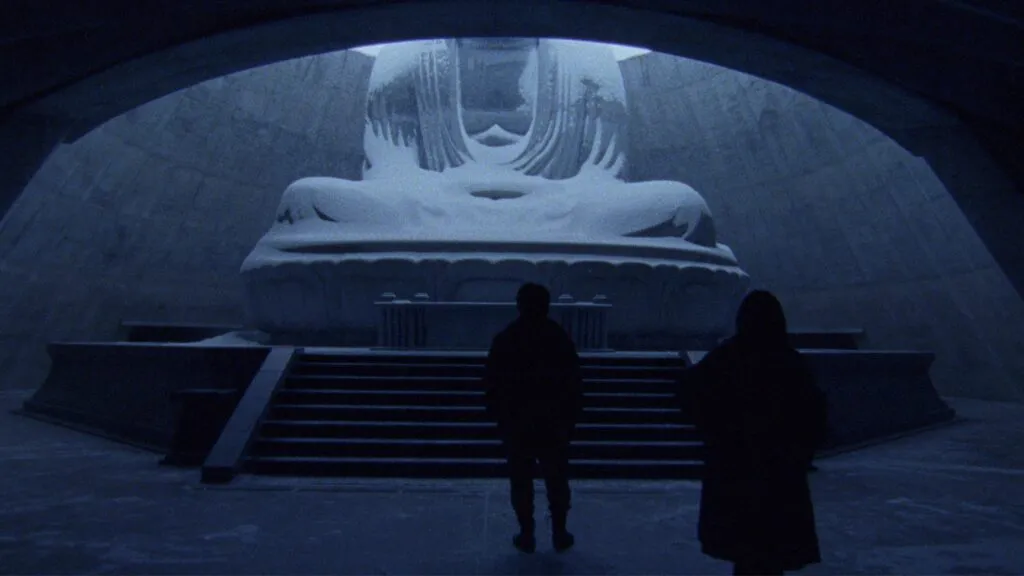
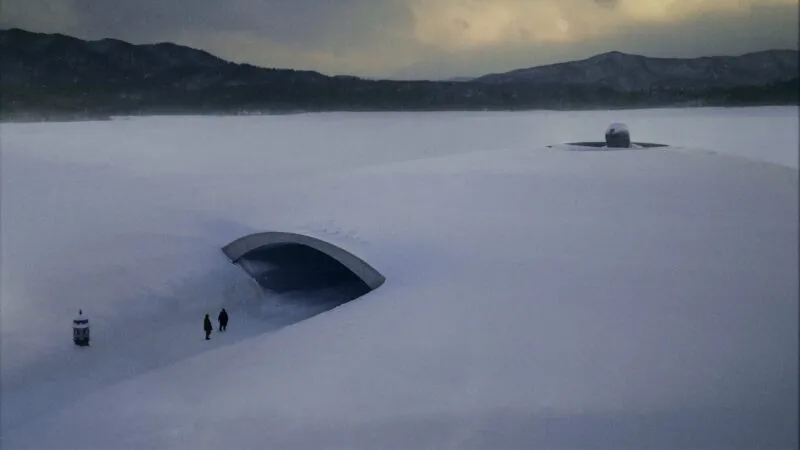
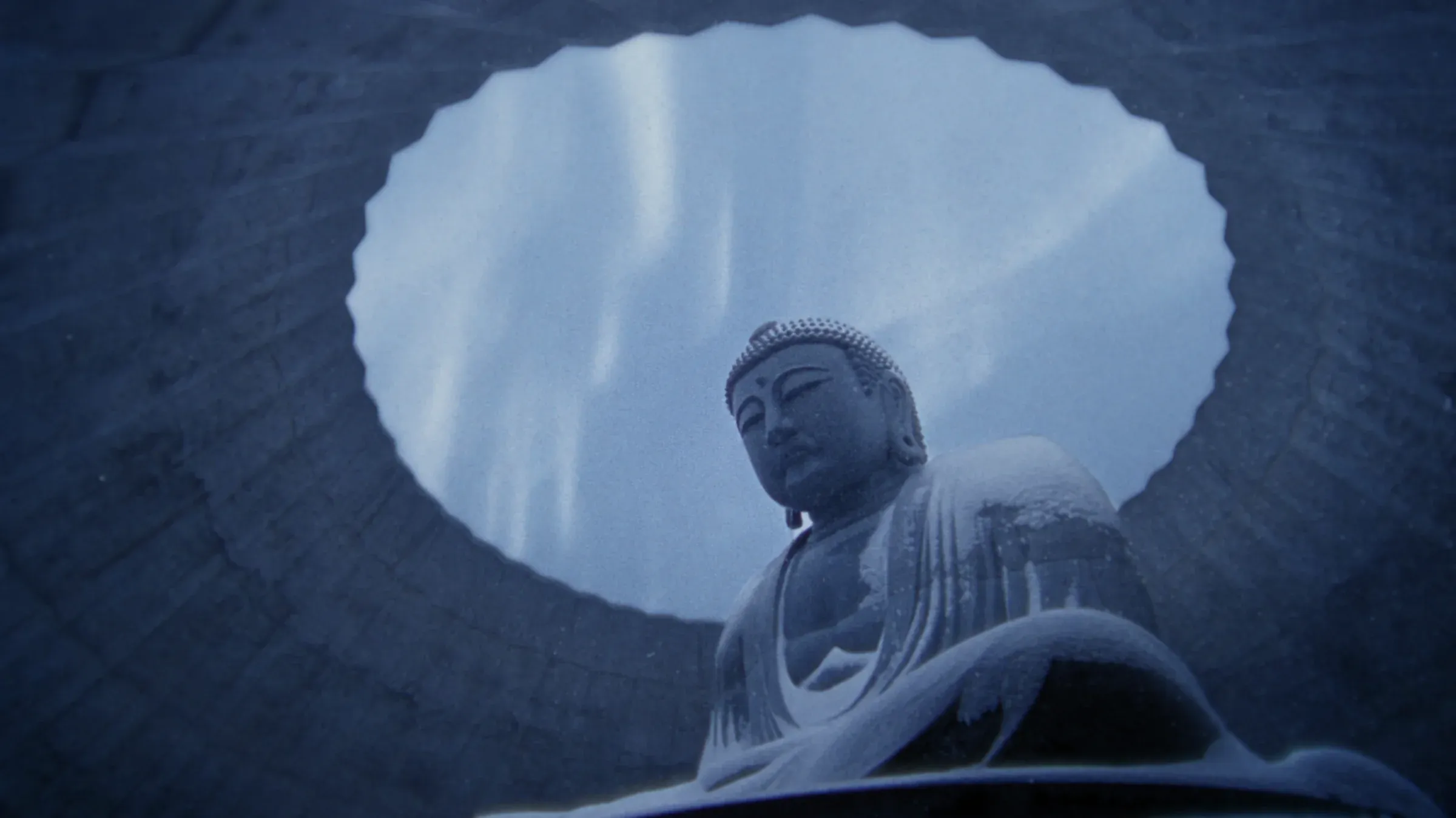
The first thing that stands out about Moongirl, Victor Boccard’s short film that had its world premiere in the Short Cuts section of the Toronto International Film Festival (TIFF), is that its images seem to contain much more than they need to tell a story. Shot on 16mm, the film runs barely twenty minutes, but it is filled with snow, forests, a frozen lake, a huge Buddha figure, and characters moving through a landscape that seems to exist outside of time. There are frames that could be lifted from the film and find their place in a gallery.
In an exclusive conversation with Mundo Películas during his time at TIFF, Boccard explains that the film was actually born before it had a fully defined story. He had read Victor Hugo’s poem Demain, dès l’aube, and knew he wanted to make a simple short film about an old man traveling to a particular place. He also had a location in mind, although he did not yet know whether he would be able to get it. The story came later.
“I knew that the final punchline of the poem was heartbreaking, and I wanted to make a short, simple film about an old man traveling to a specific place at the end. Then I started creating his backstory. Why is he going there? Is it a grave? Whose grave is it? Is it the grave of a girl? Was she his first love?”
The answers to those questions eventually led Boccard to The Tale of the Princess Kaguya (2013), Isao Takahata’s animated film based on one of Japan’s oldest legends. From that combination came a story that brings together two very different traditions and, nevertheless, finds in both a shared concern with loss, love, and what remains after someone is gone. In Moongirl, a young writer tells a man a story about a girl who came from the Moon. As the story unfolds, the boundaries between what she is inventing and what the characters are experiencing begin to disappear.
“I saw The Tale of the Princess Kaguya again and thought that this story worked so well on its own that I wanted to use the universal power of that story and twist it. What if she decided to stay? I don’t even remember when the mix happened. It happened very organically. I didn’t plan it.”
The film is built precisely around that uncertainty. Something happened, or might have happened, but there is also a story that someone needs to tell in order to give that event a shape. The old painter we see at the beginning and end seems to have spent decades trying to turn that encounter into something he can preserve. His memories appear transformed into paintings, as if art were the only way to complete the pieces that reality left unfinished.
Boccard had decided from the beginning that those paintings would be necessary. “I knew from the very beginning that I wanted paintings because I knew some emotions in the film couldn’t be shown in real life. I needed art to express those emotions, like the missing pieces of a puzzle.” After several months of searching, he found a 19-year-old Japanese artist who had just graduated from an art school in Tokyo, and she eventually painted the fourteen works that appear in the film.
But if the paintings function as an extension of what cannot be said, music plays an even more delicate role. Moongirl seems to constantly drift between reality and imagination, and the soundtrack is one of the tools that makes that movement possible. We never fully know whether we are hearing the story of a young woman who really came from the Moon or the story that someone else needed to construct around an encounter.
For Boccard, music did not come after the film, but practically at the same time as the idea itself. His collaborator and friend Seiji Champollion was involved from the earliest stages of the project and composed music before filming had even begun. Boccard even used it during auditions so that the actors could enter the film’s sonic universe.
“I can’t create at all without music. I need to have music all the time. Sometimes I even put on my AirPods on set to isolate myself and really listen to the music, and then I find a solution for how to direct a specific part of the scene. It’s my guideline.”
The importance of music helps explain why Moongirl never seems interested in completely separating reality from imagination. The film does not need to decide whether the young woman really belongs to another world. It is enough to show that, for the person listening to her story and for the person who eventually makes her the center of his life, that possibility can acquire a truth of its own.
Boccard made that decision deliberately. “I always knew that I didn’t want to fall into the fully supernatural genre kind of film and for that I knew that I needed to keep my one of my foot in the reality and for that I knew I shouldn’t give the answer.” What is interesting is that this ambiguity is not limited to the relationship between the film and its audience. There is no single interpretation within the crew either.
“Very early on, the script was also very complicated, and even within my own team, nobody was on the same page about who she is or where she came from. And I love that. The DP has his interpretation, Seiji has another interpretation, and everybody I meet has a different interpretation. I don’t want to break that. I always thought I was never going to give the answer, even to myself.”
There is something especially beautiful about that decision because Moongirl does not seem interested in determining whether a story is true, but rather in exploring what happens when we begin to live according to it. Memory works in a similar way. As time passes, events stop existing solely as facts and begin to become stories. We modify them, arrange them, repeat them, and sometimes end up believing in them in a way that no longer depends on their accuracy.
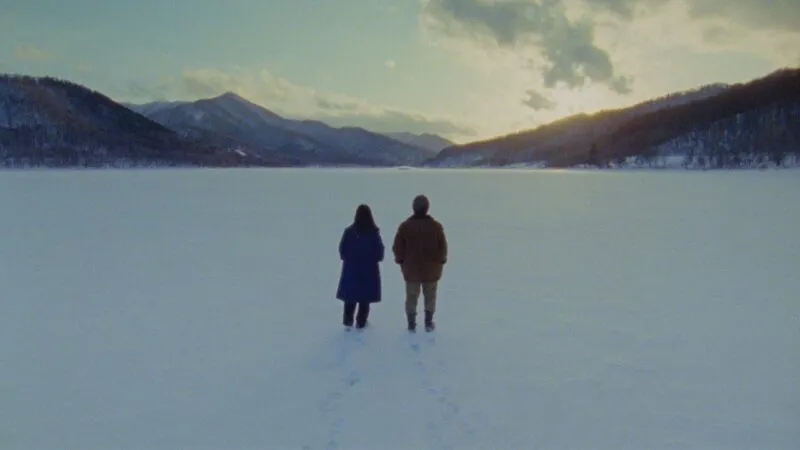
That is where one of the short film’s most moving ideas emerges. It can be read as a love story, but also as the story of a love that may never have existed exactly as someone remembers it. A story told so many times that it eventually acquires a reality of its own. A story capable of accompanying a person for decades and even becoming the thing that defines his work.
The location was fundamental in creating that feeling. Boccard discovered the temple and cemetery in Hokkaido before he even knew the film would take place in Japan. A photograph he found on Instagram caught his attention, and he began investigating until he discovered that it was a sacred space designed by architect Tadao Ando where filming was not allowed. His obsession with the place eventually became so strong that he wrote the story specifically so he could shoot there.
The shoot was limited to four hours spread across two mornings, including setup and wrap, with temperatures reaching 20 degrees below zero and using only natural light. But the location did more than condition the production. It also changed the film.
“The locations, even before changing or altering them with VFX, really inspired the soul of the film. When I first went to scout that temple, I felt something almost supernatural. There’s a microclimate, a constant wind in that valley. It’s almost like Elysium, the place after death. That’s really what I felt when I went there.”
The experience even introduced an element that was not in the script. One of the houses used for the shoot had been inhabited by a man who died there forty years earlier. The place had been abandoned and, when the crew arrived, it still contained belongings left by its former owner. During filming, the cinematographer suggested shooting a version of a scene in which the dead body of the old painter could be seen. The real history of the location gave that image a different meaning.
“It was the first time in my life that a location made me change the script. It made so much sense because of the history of that place, which had actually been the home where an isolated man died alone. That completely influenced the film and made me change the script.”
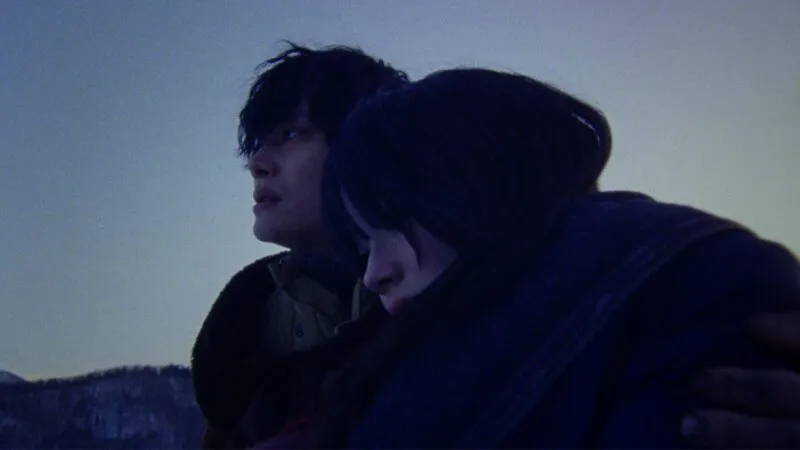
However, perhaps the most interesting aspect of Boccard’s relationship with those landscapes is that he decided not to turn them simply into postcards. The beauty of Moongirl is evident, but the film seems wary of beauty that comes too easily. There are no sweeping shots designed to demonstrate to the viewer that the landscape is beautiful. Even the exterior of the house where the painter lives, a location the crew reached after a one-and-a-half-hour hike carrying equipment and generators, is never shown.
“It was a beautiful and very old location, but we decided to resist showing too much of that beauty. There are no exterior shots. We don’t know what the house looks like. That is a language I tried to develop with this film: to be shy or humble with those places, something that is also very Japanese.”
Perhaps that is why the images in Moongirl do not function merely as scenery. Winter, distance, silence, and those spaces that are almost impossible to place within a specific period of time become part of the characters’ memory. The film seems to exist in an in-between space between the present and the past, between what happened and what someone needed to imagine had happened.
And when the old painter finally returns to that landscape, what he finds is not only the place where his story began. It is also the place where a story eventually became his life. Boccard does not need to explain which of the two versions is true. It is enough to show that both can be true in different ways.
Moongirl therefore ends where it began, in front of a story that may have been invented but that left real consequences. Because sometimes remembering does not mean preserving exactly what happened, but finding a way to keep living with what we lost. And perhaps cinema, like painting and like the stories the characters tell each other, is also one of those ways of turning an absence into something we can still look at.